
Beyond the Pump
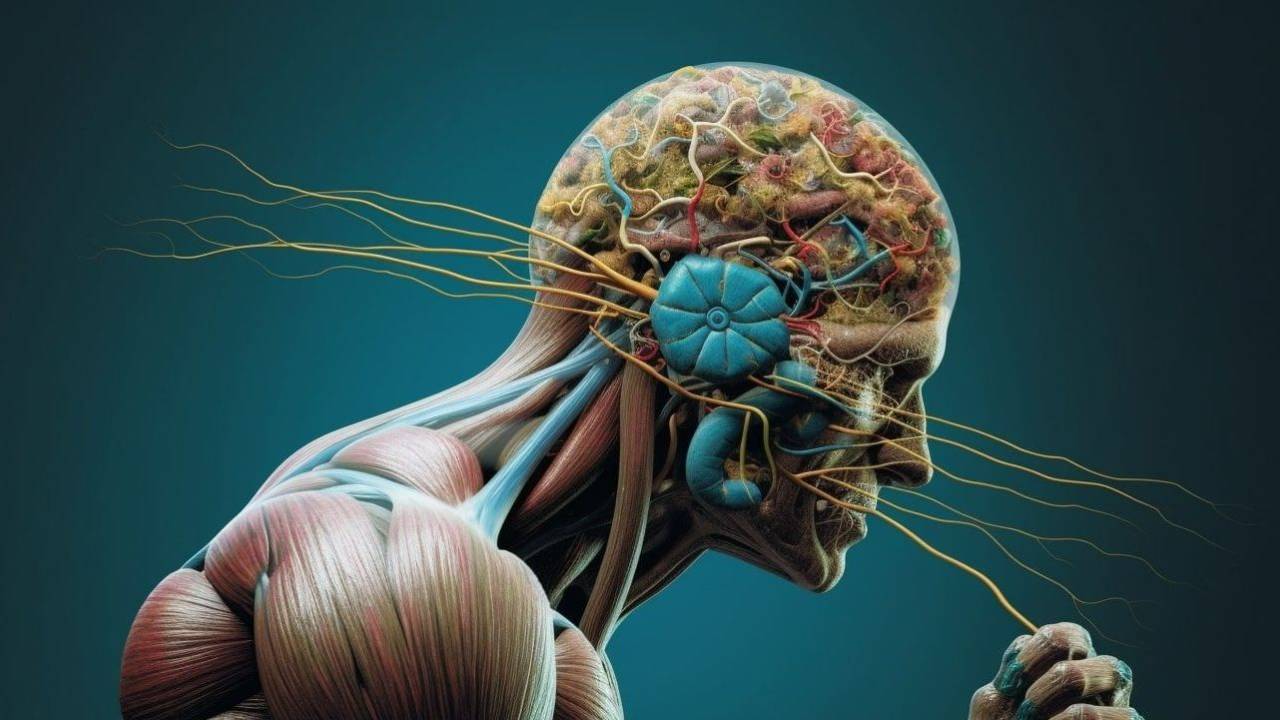
Beyond the Pump: The Trainer’s Guide to the Neuro-Fitness Revolution
For years, we’ve told our clients that exercise is the best medicine for the body. We talk about heart health, bone density, and metabolic rate until we’re blue in the face. But as we move further into 2026, the most successful trainers aren't just selling "six-packs"; they are selling "brain-span." We are entering the era of Neuro-Fitness—a shift in perspective where the brain isn't just a passenger in the workout, but the primary target.
If you’ve been keeping up with the IFPA FitBits, you know we’re all about staying ahead of the curve. While the rest of the industry is still arguing over keto vs. paleo, the real innovators are looking at how a set of Bulgarian split squats can actually make a client smarter, sharper, and more resilient to aging. This isn't science fiction; it’s neuroplasticity in action.
The Spark: BDNF and Your Brain’s Growth Potential
Think of Brain-Derived Neurotrophic Factor (BDNF) as the ultimate "post-workout recovery drink" for your neurons. In the neuroscience community, it’s often nicknamed "Miracle-Gro" for the brain. When we engage in specific types of physical exertion, our body produces this protein, which travels to the hippocampus—the seat of memory and learning—and starts repairing, protecting, and even building new brain cells.
As trainers, we need to realize that we are essentially "pharmacists" of movement. Every time you get a client’s heart rate into that sweet spot or challenge their coordination with a new complex movement, you are triggering a chemical cascade that fights off the cognitive fog of modern life. But here’s the kicker: not all exercise is created equal in the eyes of the brain. To maximize BDNF, we have to move past the "autopilot" workout.
Cognitive-Motor Interference: Why "Distracting" Your Client is Good
In the old days, if a client was talking or losing focus during a set, we’d tell them to "focus on the muscle." While mind-muscle connection has its place for hypertrophy, Neuro-Fitness introduces a concept called Cognitive-Motor Interference (CMI). This is the "interference" that happens when the brain has to manage a physical task and a mental task at the same time.
Normally, interference is seen as a negative—performance in both tasks usually drops. But in the world of neuro-plasticity, that struggle is where the magic happens. By intentionally adding a cognitive load—like having a client count backward by sevens while performing a stability ball plank—you are forcing the prefrontal cortex to work overtime. This "dual-task" training builds a more robust executive function. In plain English? It makes your clients better at multitasking in their real lives and significantly reduces their risk of falls as they age, because their brain becomes better at processing environment cues while moving.
The "Japanese Walking" Protocol: More Than Just a Stroll
One of the most exciting research items making waves in 2025 and 2026 is the Interval Walking Training (IWT) protocol out of Japan. For a long time, we thought "Zone 2" steady-state walking was the gold standard for longevity. While it’s great, the Japanese researchers found something better for the brain.
The IWT protocol is simple but effective: three minutes of fast walking (pushing to about 70-80% of their capacity) followed by three minutes of slow, rhythmic walking. Repeat for five or more sets. The secret sauce here isn't just the cardiovascular hit; it’s the constant neurological "shifting" required to monitor and change intensity. This protocol has been shown to increase hippocampal volume and improve glucose metabolism in the brain far more effectively than a standard 30-minute slog on the treadmill. It’s a tool every IFPA trainer should have in their kit for their 50+ demographic.
Complexity: The Death of the "Neurologically Cheap" Workout
We’ve all seen that client who has been doing the same circuit for three years. They can do it in their sleep. Physically, they might be maintaining, but neurologically, that workout is now "cheap." The brain is an energy-hog; if it knows a movement pattern perfectly, it will automate it to save calories. Automation is the enemy of growth.
To keep the brain evolving, we have to introduce Complexity. A treadmill is a low-complexity environment. A rocky trail or a complex agility ladder drill is high-complexity. When you introduce a new implement—let's say moving from a dumbbell to a macebell—the brain has to map out new spatial relationships and firing patterns. This is why "novelty" is a core pillar of Neuro-Fitness. Once your client masters a move, it’s time to change the tempo, the plane of motion, or the sensory input. If they aren't thinking, they aren't growing.
Fighting the Sarcopenia of the Mind
We talk a lot at the IFPA about sarcopenia—the age-related loss of muscle. But we are now realizing that "cognitive sarcopenia" (the shrinking of brain matter) follows a similar trajectory. The good news? The same heavy lifting that saves the glutes and quads also saves the white matter in the brain.
Recent 2025 clinical trials have highlighted that heavy resistance training (70% 1RM and above) releases IGF-1, a growth factor that works hand-in-hand with BDNF. It improves the vascular health of the brain, essentially "cleaning out the pipes" and ensuring that oxygen and nutrients can reach the deepest centers of the mind. When you combine heavy squats with a reaction-time drill, you are providing the ultimate "Total Body, Total Mind" insurance policy.
Programming the Brain-First Session
How do you actually run a Neuro-Fitness session without overwhelming the client? It’s all about the "Stack."
- The Neural Primer (Minutes 0-10): Start with play. Use reaction balls, partner-clapping drills, or light agility work. You want to "prime" the nervous system and get the synapses firing before you move to the heavy stuff.
- The Power/Strength Block (Minutes 10-30): This is where you do your heavy lifting. Focus on compound movements. To add a neuro-tweak, have the client perform these with a "variable tempo"—fast up, four seconds down, two-second pause. The brain has to stay engaged with the clock.
- The Dual-Task Finisher (Minutes 30-45): This is where we bring in the CMI. Pair a functional movement (like a farmer's carry) with a cognitive task (naming a different capital city for every ten steps).
- The BDNF Flush (Minutes 45-55): End with the Japanese Walking Intervals. This ensures the client leaves the gym with a peak "chemical bath" of BDNF circulating through their system.
- The Downshift (Minutes 55-60): You cannot leave a client in a high-arousal state. Use box breathing or guided mobility to shift them back into the parasympathetic "rest and digest" mode. This is where the neural connections made during the workout are actually "encoded" into memory.
The Final Rep: Thinking Beyond the Muscle
The fitness industry has a bad habit of looking at the human body as a collection of parts—biceps, hamstrings, lungs. But the brain is the conductor of the entire orchestra. If the conductor is tired, sluggish, or disconnected, the music will never sound right, no matter how good the individual instruments are.
As an IFPA professional, you have the opportunity to change the narrative. You aren't just helping people look better in a swimsuit; you are helping them remain the "authors of their own lives" as they age. By training for neuroplasticity, you are giving your clients the gift of a sharp mind, a quick wit, and a resilient spirit. That is the true power of the Neuro-Fitness revolution. It's time to stop training from the neck down and start training the whole human.
Sources
- Cotman, C. W., & Berchtold, N. C.(2025). The Neuroscience of Movement: How Exercise Reshapes the Human Brain. Oxford University Press.
- Nakamura, T., et al.(2024). Interval Walking Training and Cognitive Reserve: A Five-Year Longitudinal Study. Journal of Aging and Physical Activity.
- Erickson, K. I., et al.(2025). Physical Activity and Brain Health: The Role of BDNF and IGF-1 Synergies. Nature Reviews Neuroscience.
- IFPA Research Bulletin.(2026). Cognitive-Motor Interference: Practical Programming for the Modern Personal Trainer.
If you're enjoying this article and want to take your learning further, purchase the exam to earn 1 CEU credit. Credits are awarded upon passing the exam—keep growing and stay ahead in your fitness career!
