
Blood Flow Restriction (BFR) Training: Hypertrophy for Sore Joints
To build strength and stimulate muscle hypertrophy, weight room logic has always dictated a simple, uncompromising equation: you must lift heavy weights. For decades, exercise science stated that to trigger significant muscle growth, you needed to lift loads of at least 65% to 80% of your one-rep maximum (1RM). This heavy structural loading is necessary to create the mechanical tension required to signal your body to repair and expand its muscle fibers.
However, this heavy-loading paradigm presents a major obstacle for the aging athlete, the injured performer, or anyone navigating compromised joints, tendinitis, or arthritis. Pushing joints to their mechanical limits often triggers a cycle of inflammation and pain.
But as we advance through 2026, Blood Flow Restriction (BFR) Training has firmly shifted from clinical physical therapy environments directly into mainstream athletic programming. This technique hacks human physiology, allowing you to achieve elite levels of muscle growth using light weights that put virtually zero stress on sore or compromised joints.
The Applied Mechanics of Localized Hypoxia
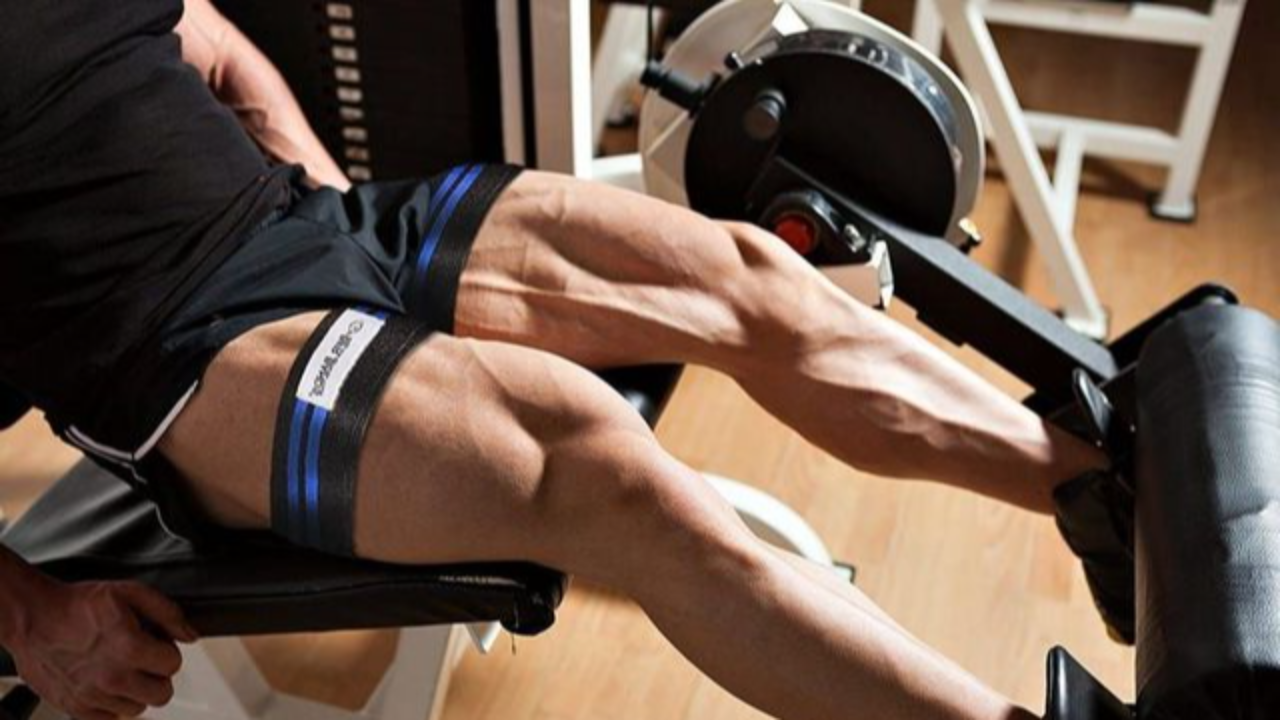
Blood Flow Restriction training involves wrapping a specialized, pneumatic cuff or automated tourniquet band around the topmost portion of a limb—either the upper arm or the upper thigh. The cuff is then inflated to a very specific, calculated pressure.
The magic of BFR lies in the precise manipulation of your circulatory system:
-
Arterial Inflow Remains Open: The cuff pressure is high enough to slow down blood flow, but not high enough to block it completely. This allows oxygen-rich arterial blood to continue pumping into the working muscle.
-
Venous Outflow Is Restricted: The pressure is perfectly calibrated to completely compress the thinner, less pressurized veins. This prevents blood from leaving the limb, trapping it entirely within the working muscle.
This combination creates a state of localized hypoxia (oxygen deprivation) and extreme blood pooling. As you perform an exercise, the muscle rapidly runs out of oxygen, transforming a simple, light-weight movement into an intense cellular emergency.
Hacking the Motor Unit Recruitment Chain
To understand why this builds muscle without heavy weights, you have to look at how your nervous system recruits muscle fibers. Under normal conditions, your body follows Henneman’s Size Principle. When lifting a light weight, your brain only recruits your smaller, slow-twitch (Type I) muscle fibers, which are built for endurance and have very low growth potential. Your body only recruits the large, powerful, fast-twitch (Type II) muscle fibers—the ones responsible for explosive strength and muscle mass—when forced to handle heavy loads.
BFR completely bypasses this rule. Because the venous restriction traps blood and starves the muscle of oxygen, your slow-twitch endurance fibers rapidly deplete their energy stores. The cell is unable to clear metabolic waste, creating an environment where Type I fibers can no longer contract.
To keep the limb moving, your brain is forced to immediately recruit the high-threshold, fast-twitch Type II fibers, even though you are only lifting a fractional load of 20% to 30% of your 1RM. You effectively trick your nervous system into treating a light dumbbell like a maximal barbell load.
The Metabolic Cascade and Growth Hormone Spike
While heavy lifting triggers muscle growth primarily through mechanical tension, BFR triggers hypertrophy through massive metabolic stress. As the fast-twitch fibers fire in an oxygen-deprived environment, they produce energy anaerobically, causing a rapid accumulation of metabolic byproducts like hydrogen ions and lactate. This accumulation creates an intense local burn and drives fluid shifting into the cells, known as cellular swelling.
This metabolic crisis triggers a massive systemic endocrine response. When the cuffs are deflated post-workout, the brain detects the sudden release of accumulated lactate and interprets it as severe tissue damage.
In response, the pituitary gland triggers a systemic spike in Human Growth Hormone (HGH)—often registering up to 290 times baseline levels. This is a significantly higher hormonal surge than what is typically generated by traditional heavy lifting, providing a powerful systemic environment for tissue repair, collagen synthesis, and fat metabolism without ever straining a single tendon or ligament.
The Safety Screening: Who Should Avoid BFR?
While BFR is incredibly safe when programmed correctly, it changes vascular pressure and is not appropriate for everyone. Because it intentionally alters venous return, there are absolute contraindications to this training style.
You must completely avoid BFR training if you have a history of:
-
Deep Vein Thrombosis (DVT) or active blood clots
-
Severe, Uncontrolled Hypertension (blood pressure over 180/110 mmHg)
-
Peripheral Vascular Disease or compromised circulatory pathways
-
Active Lymphedema or a history of lymphadenectomy in the target limb
-
Pregnancy or active localized skin infections
Always screen your baseline cardiovascular health before introducing vascular occlusion to your routine.
The Standard BFR Programming Protocol
To safely utilize BFR training for hypertrophy and joint preservation, you must follow a highly structured format:
-
Cuff Width Matters: Avoid narrow, homemade bands or tight wraps, which act like sharp tourniquets and require dangerous, arbitrary pressures to work. Prioritize wider cuffs. Wider cuffs mechanically compress a larger surface area, requiring significantly lower pressures to safely restrict venous outflow, making them far more comfortable.
-
Target Sub-Occlusive Pressures: For the upper body, cuffs are typically inflated to 40% to 50% of arterial occlusion pressure. For the larger vessels of the lower body, the pressure is set between 60% to 80%. The goal is sub-occlusive; blood must always flow in.
-
The 30-15-15-15 Repetition Matrix: BFR requires a high-repetition, short-rest format to maximize metabolic pooling. Perform 4 sets with a load of 20–30% of your 1RM:
-
Set 1: 30 repetitions (to deplete oxygen and exhaust slow-twitch fibers)
-
Rest: 30 seconds (keep the cuffs inflated)
-
Set 2: 15 repetitions
-
Rest: 30 seconds
-
Set 3: 15 repetitions
-
Rest: 30 seconds
-
Set 4: 15 repetitions
-
-
The 20-Minute Reperfusion Floor: Never leave a limb occluded for more than 15 to 20 minutes continuously. Deflate the cuffs fully between exercises to allow fresh blood to rush back into the tissue and restore oxygen balance.
Training Smarter, Not Harder
True training longevity is about achieving maximum physiological adaptation with minimal structural damage. Blood Flow Restriction training proves that you do not have to destroy your joints to build a resilient, muscular, and metabolically active frame.
By incorporating BFR into your training architecture, you can give your joints a break while continuing to push your muscular and hormonal boundaries. Stop relying solely on heavy iron to force your body to grow; wrap up, lighten the load, and harness the power of metabolic stress to build a body that lasts.
Sources
-
Journal of Applied Physiology: "Role of metabolic stress in mechanical tension-mediated muscle hypertrophy during blood flow restriction."
-
The American Journal of Sports Medicine: "Clinical safety and efficacy of blood flow restriction therapy in cardiovascular and orthopedic rehabilitation environments."
-
Scandinavian Journal of Medicine & Science in Sports: "Henneman's size principle bypass and high-threshold motor unit recruitment during low-load vascular occlusion exercise."
Written by: L.R. Moxcey
