
Neuro-Visual Training: Re-engineering Balance via the Visual System
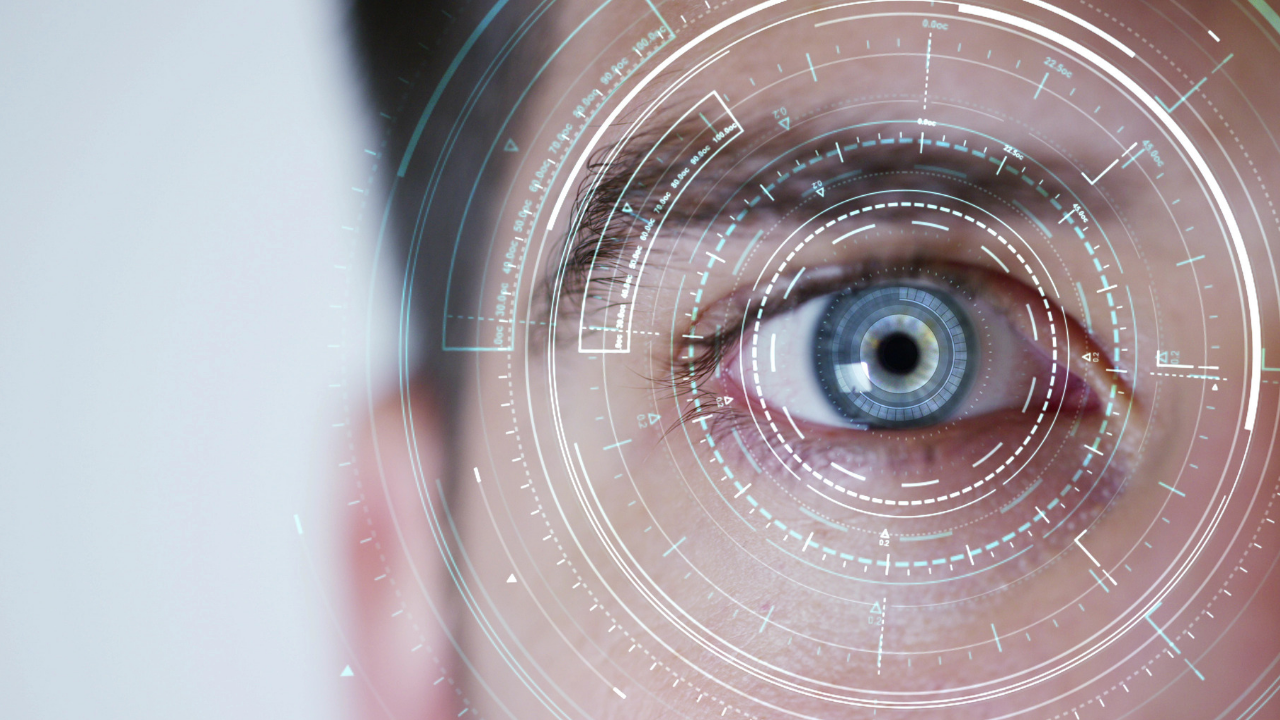
When a movement pattern feels restricted, heavy or stiff, your default reaction is to blame the target tissues. If your hamstrings feel tight when bending over, you assume the muscle is physically short and requires stretching. If your squat depth feels blocked, you blame ankle mobility or hip anatomy. You focus your recovery efforts entirely on mechanical solutions like foam rolling, stretching and massage.
However, sports neurology exposes a major flaw in this purely biomechanical approach. Your muscles do not operate in a vacuum. Every muscle contraction, joint position and balance adjustment is a deliberate command issued by your central nervous system. Before your brain allows you to lift a weight, run a stride or perform a stretch, it asks one foundational question: is this movement safe?
If your brain perceives any threat to your structural safety, it acts like an emergency brake, tightening your muscles and restricting your range of motion to protect you from perceived injury. True mobility, balance and stability are not managed by your muscles. They are directed by your visual system. By integrating neuro-visual concepts directly into your movement practice, you can release these neurological brakes and instantly unlock hidden levels of physical performance.
The Governing Hierarchy of Movement
To understand how your eyes control your squats, you have to look at the neural hierarchy of human movement. Your brain relies on three separate sensory systems to map where your body is in space, evaluate environmental threats and coordinate motion.
The first is the visual system, which tells the brain where you are relative to your surroundings, identifies incoming obstacles and establishes a horizon line. The second is the vestibular system, located inside your inner ear. This fluid-filled network acts as your body's internal level, tracking head acceleration, rotation and gravity. The third is the proprioceptive system, which is the map inside your muscles, joints and connective tissues that monitors mechanical tension, pressure and joint angles.
This three-part input system functions like an elite security team, but the systems are not equal. The visual system is the undisputed captain of the team. Over 70% of your body's sensory receptors are located in your eyes, and roughly half of your brain's cortex is dedicated to processing visual information.
If your visual system is sending blurry, inaccurate or delayed information to your cerebellum, your brain experiences a state of sensory mismatch. It assumes you are unsafe in space, panics and triggers a protective survival response. This response presents as chronic muscle tightness, poor balance, low coordination and a general feeling of physical weakness.
The Vision-Mobility Loop in Real Time
The most powerful demonstration of this neuro-visual loop is the immediate relationship between eye movement and hamstring flexibility. The nerves that control your extraocular muscles, which move your eyes up, down, left and right, share a direct high-speed neural pathway with the suboccipital muscles at the base of your skull. This neck region links directly down your spine to your deep posterior myofascial chain.
When your visual system struggles to track an object smoothly or shifts focus inefficiently, your suboccipital muscles lock up to stabilize your skull. This upper-neck tension cascades down your spine, signaling your glutes and hamstrings to tighten into a defensive posture. You can stretch your hamstrings for hours without making permanent progress because the tightness is a neurological command, not a structural limitation.
To test this mechanism right now, try a simple diagnostic experiment. Stand up with your feet together and bend forward to touch your toes, noting exactly where your flexibility stops and where you feel the initial pull in your legs.
Once you establish your baseline, stand back up, hold your thumb out at arm's length, and perform a gaze stabilization drill. Keep your eyes locked perfectly on your thumb while slowly shaking your head side to side and up and down for twenty seconds. This action forces your visual and vestibular systems to synchronize, clearing out sensory background noise.
Immediately drop back down into your forward fold. Most individuals experience an immediate, almost eerie sensation of warmth and lightness in their lower back as their hands reach two to three inches closer to the floor. The physical structure of the muscle did not change in those twenty seconds; your brain simply felt safe enough to release the emergency brake.
Deconstructing Your Visual Field
Neuro-visual conditioning does not mean testing your visual acuity, such as reading letters off a distant wall chart. Instead, it focuses on conditioning the motor skills of your eyes to ensure they can track, focus and stabilize accurately during physical stress. This requires balancing two distinct neural tracking functions: saccades and smooth pursuits.
Saccades are rapid, explosive eye movements where your vision jumps quickly from one fixed target to another. In athletic environments, saccades are what allow a runner to scan terrain or a lifter to quickly shift focus between positions. When your saccadic accuracy is poor, your eyes undershoot or overshoot the target, requiring micro-adjustments. This constant visual searching creates intense mental fatigue and degrades your spatial awareness, making your movement patterns feel clunky and uncoordinated.
You can actively sharpen this skill by introducing target jumps directly into your training transitions. Between sets of lifts, hold your thumbs out wide in front of your face. Without moving your head, rapidly snap your eyes back and forth from your left thumb to your right thumb as fast as possible for fifteen seconds, aiming for crisp, clean jumps.
Smooth pursuits, on the other hand, are the ability of your eyes to fluidly track a moving object through space without your head moving. If your smooth pursuits are degraded, your tracking looks jumpy, resembling a series of tiny, frantic steps rather than a smooth arc. Your brain interprets this visual stutter as a loss of stability, prompting it to slow down your movement speed and increase muscle stiffness to prevent a fall.
To condition this pathway, practice near-far focus jumps during your morning routine. Hold a single pen a few inches in front of your nose, choose a distant object on the wall across the room and quickly jump your focus between the two, ensuring each target becomes perfectly crisp before switching.
Surviving the Digital Landscape
The modern lifestyle is a hostile environment for your visual system. We spend hours every day staring at flat, glowing screens located just a few inches from our faces. This behavior locks our eyes into a state of chronic convergence, meaning they look inward, while maintaining a static near-focus. This digital confinement causes severe atrophy of the extraocular muscles and reduces your peripheral vision capacity.
When you transition straight from a computer desk to a heavy workout session, your visual system is effectively blind to its wider surroundings. Your brain enters the gym in a state of high alert, resulting in sub-optimal power production, poor balance and an increased risk of joint injuries. Spending just one to two minutes running through fluid tracking drills before you touch a barbell cleans the visual windshield of your brain, signaling to your nervous system that it is finally safe to move freely, powerfully and without restriction.
Take Your Movement Mastery to the Next Level
Understanding how the brain, eyes and muscles coordinate is just the beginning of true performance engineering. If you are ready to move past outdated fitness myths and deeply master the science of human motion, explore our Biomechanics of Sports & Exercise course. Learn how to analyze kinetic chains, optimize movement efficiency and build injury-resistant athletes from the inside out.
Written by: L.R. Moxcey
