
Re-Linking Your Brain’s Hemispheres for Elite Coordination
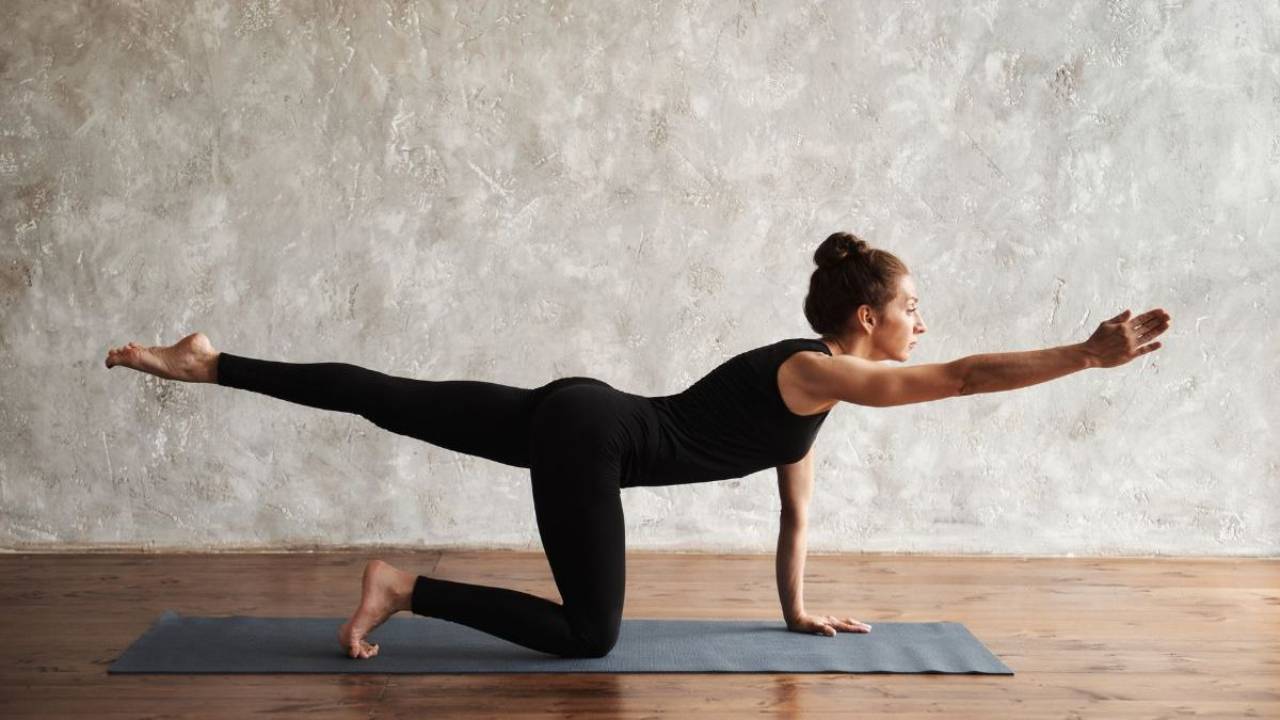
The Cross-Crawl Effect
When an athlete struggles with dynamic balance, suffers from delayed reaction times or constantly defaults to uneven movement compensation patterns, fitness programming typically targets local joint structures. We prescribe asymmetrical ankle stability drills, execute isolated core bracing sequences and emphasize single-leg patterns. We assume that coordination is a fixed genetic attribute, treat movement errors as isolated muscular failures and focus entirely on the peripheral body parts.
However, clinical neurology and functional anatomy have exposed a profound systemic reality that completely rewrites this mechanical paradigm. Your movement precision does not originate in your joints or your local muscle tissues, because it is entirely bounded by the processing speed of your central nervous system. Every complex athletic action requires continuous high-speed communication between the left and right hemispheres of your brain. This cross-talk is managed by a dense structural bridge of over two hundred million nerve fibers known as the corpus callosum. By deliberately practicing a contralateral movement protocol known as the Cross-Crawl Effect, you can physically stimulate and optimize this neural bridge to sharpen your spatial awareness, eliminate hidden muscular compensation loops and act as a powerful cognitive shield against biological aging.
The Neurological Highway of the Torso
To understand the power of the Cross-Crawl Effect, you must look at how the brain maps physical movement. Your brain operates on a contralateral control system, meaning the left motor cortex directs the right side of your body, while the right motor cortex coordinates the left side. When you perform an isolated, single-sided exercise like a standard bicep curl, the computational demand remains largely confined to a single hemisphere. However, human locomotion did not evolve to happen in isolation. True functional human movement relies on continuous cross-body synchronization. This concept is the foundation of the spinal engine theory, which proves that human locomotion is a dynamic, twisting matrix powered by the rotation of the spine rather than just the legs pushing the ground.
Every time your right arm swings forward while your left foot drives into the ground, your brain must execute a high-speed neural handoff across the corpus callosum. If this structural bridge is sluggish or under-stimulated due to a sedentary lifestyle and repetitive linear training, your brain experiences a minor processing delay. It struggles to coordinate the opposing sides of your frame simultaneously, forcing your body to create micro-compensations that present as chronic joint tracking issues, poor balance and an inability to master complex athletic skills.
Unlocking the Power of the Corpus Callosum
The beauty of the Cross-Crawl Effect is its ability to physically alter the structure of your brain through a concept known as activity-dependent neuroplasticity. When you intentionally force your opposite limbs to execute coordinated, multi-planar patterns, you generate a massive spike in electrical activity across both hemispheres. This simultaneous activation forces the corpus callosum to strengthen its existing neural pathways and forge entirely new synaptic connections. This process thickens the biological insulation surrounding your nerves, dramatically accelerating the speed of cross-hemisphere information transfer.
This neurological upgrade delivers immediate advantages on the gym floor. With a highly optimized corpus callosum, your brain can process sensory data much faster, allowing you to instantly adjust your foot positioning on unstable terrain, stabilize your core cylinder right as you catch a heavy barbell or read an opponent's movement on a field.
Furthermore, this cross-talk maximizes your motor unit recruitment. By clearing the neural processing delays between your left and right hemispheres, you can transfer force more fluidly along your myofascial oblique slings, instantly unlocking hidden levels of speed, torque and power output across your entire frame.
The Cognitive Shield Against Biological Aging
The benefits of prioritizing contralateral coordination extend far beyond physical performance, because the Cross-Crawl Effect is a critical component of lifelong cognitive longevity. As the human brain ages, it naturally undergoes a process of hemispheric specialization and neural decay. The left and right sides of the brain begin to communicate less frequently, a structural disconnect that directly drives age-related balance degradation, spatial disorientation, memory loss and cognitive decline.
Contralateral movement patterns act as a powerful antidote to this aging process. Forcing the brain to maintain active communication across the corpus callosum keeps both hemispheres highly integrated and resilient. It stimulates the production of brain-derived neurotrophic factor, which serves as a biological fertilizer that supports the growth and survival of new brain cells in your memory center. By embedding cross-crawl mechanics into your physical training, you are not just building a coordinated body, you are actively preserving your mental acuity, sharpening your executive functioning and insuring your brain against neurological decay.
Programming the Cross-Lateral Reset
Integrating the Cross-Crawl Effect into your routine requires stepping away from traditional, single-plane exercises and introducing intentional cross-body complexity into your warm-up templates using specific neurological drills. To wake up your corpus callosum, you can introduce a deliberate dead-bug sequence on the floor before handling heavy mechanical loading. Lie flat on your back with your arms reaching toward the ceiling and your knees bent at a ninety-degree angle. Slowly lower your right arm completely overhead while simultaneously extending your left leg straight out just above the floor, keeping your lower back pressed firmly into the ground to lock your core stability. Hold this fully extended contralateral position for a count of two, focusing on the cross-body tension running from your right shoulder to your left hip, then return to center and repeat the sequence with your left arm and right leg.
To progress this activation into an upright position, transition into a deliberate cross-crawl march that incorporates your vestibulocochlear system. Stand tall, pull your ribs down and lift your right knee toward your chest while simultaneously bringing your left elbow across your body to tap the top of that knee. As you alternate to the opposite side to tap your left knee with your right elbow, keep your gaze completely locked on a fixed horizontal target in front of you while your torso rotates underneath your skull. Focus entirely on execution precision, stability and fluid rhythm rather than rushing the movement, treating each cross-body touch as a high-speed text message from your tissues straight to your brain's command center to integrate your eyes, ears and limbs.
The Whole-Brain Machine
True athletic evolution is not an exercise in isolating muscles or tracking superficial metrics on a screen. Your physical capabilities, coordination, balance and structural safety are entirely dependent on how fluidly the left and right sides of your nervous system communicate under stress. By recognizing the power of the Cross-Crawl Effect and intentionally strengthening the structural bridge of your corpus callosum, you move past the limitations of fragmented training. Link your brain's hemispheres, optimize your internal communication network and experience the power of a whole-brain machine built to move with absolute precision and mastery.
Written by: L.R. Moxcey
