
The Pelvic Floor Piston
The Deep Core Synergy Lifters Ignore
When weight room programming shifts its focus to heavy structural lifts, the coaching cues follow a predictable script. We tell athletes to pull their ribs down, pack their shoulders, take a massive belly breath and brace their abdominal walls as if preparing to take a punch. We look closely at the alignment of the spine and the tracking of the knees, assuming that a rigid, hard contraction of the outer midsection is all it takes to secure the human frame against heavy iron.
However, advanced sports medicine and pelvic floor physical therapy have exposed a major structural blind spot in this external bracing model. True spinal stability and power transfer do not depend on how hard you can squeeze your visible abdominal muscles. Instead, it relies entirely on a hidden, sub-surface coordination pathway known as the Pelvic Floor Piston. This is the synchronized, dynamic relationship between your respiratory diaphragm at the top of your torso and your pelvic floor muscles at the bottom of your pelvis. When you ignore this deep internal synergy and rely solely on raw, uncoordinated outer bracing, you create massive internal pressure leaks. These structural leaks over-tax your lower back joints, increase your risk of sports hernias and flatten your power production.
The Two Diaphragms of the Deep Front Line
To understand how this deep internal piston operates, you have to look past separate muscle definitions and view your torso as a unified hydraulic chamber. This chamber houses two distinct horizontal diaphragms that face each other from opposite ends of your spine. The top is your respiratory diaphragm, which regulates your lung expansion and internal core pressure. The bottom is your pelvic floor, which is a hammock-shaped bowl of muscles and connective tissues that spans the base of your pelvis, supporting your internal organs and anchoring your lower core. These two structures are physically bound together by a deep fascial highway known as the Deep Front Line, which forms the absolute foundational core of your physical stability.
In a healthy body, these two diaphragms function like a perfectly synchronized hydraulic piston, neurologically wired to move in identical directions at the exact same time. During the inhale, your respiratory diaphragm flattens and descends downward into your abdominal cavity, and to accommodate this downward shift in internal pressure, your pelvic floor must simultaneously descend and eccentrically lengthen.
Conversely, during the exhale or when you generate physical force, your respiratory diaphragm rises upward toward your chest, and your pelvic floor automatically contracts and lifts upward into your pelvis, driving the pressure wave cleanly up the kinetic chain. This continuous vertical oscillation is the primary mechanism that manages your intra-abdominal pressure during daily life and athletic performance, ensuring that force is distributed evenly across your entire spinal column rather than crashing down on a single joint.
The Downward Blowout: How Bracing Goes Wrong
The primary reason lifters suffer from lower back injuries, sports hernias and pelvic floor dysfunction is a complete breakdown of this hydraulic synergy. In a desperate attempt to create a rigid core, many athletes use a forced bracing strategy that pits the two diaphragms against each other. They take a shallow chest breath, lock their throat and aggressively smash their abdominal muscles inward. This uncoordinated movement forces the respiratory diaphragm down with immense power while cutting off its natural communication with the lower pelvis.
When you compress your midsection without allowing the pelvic floor to expand and catch the load, you create a downward hydraulic blowout. The massive internal pressure has nowhere to go, so it shoots straight down into the base of your pelvis, overloading your connective tissues and forcing your lower back joints to absorb the mechanical shear stress. Over time, this constant downward battering stretches and weakens the pelvic hammock, resulting in chronic lower back stiffness, deep hip instability and exercise-induced urinary incontinence during heavy lifts.
Squeezing your abs harder will not fix this issue because you are trying to stabilize a cylinder that is structurally leaking from the bottom. To deeply fix this internal leak, it is essential to first master the foundational multi-directional breath pattern. If you haven't read our comprehensive guide on The 360-Degree Expansion: Re-Engineering the Diaphragmatic Breath, take a moment to read it now to understand how to correctly activate the top of this internal piston before attempting to synchronize it with the base of your pelvis.
Redefining the Core Brace: The Piston Blueprint
Escaping this destructive pattern requires re-educating your nervous system to utilize the full range of the pelvic floor piston during exercise. You must transform your core brace from a static, rigid squeeze into a dynamic, pressure-managed contraction. To evaluate this synergy in real time, sit tall on a firm surface, place your hands on your lower waist and relax your jaw. Inhale deeply through your nose, focusing on the 360-degree expansion of your lower ribs, and consciously visualize your pelvic floor lengthening downward toward the chair as your belly and ribs open. As you transition into a slow, audible exhale through pursed lips, initiate the contraction from the absolute bottom of your torso. Gently lift your pelvic floor upward as if you are trying to stop the flow of urine, and feel how that subtle internal lift automatically triggers a deep, corset-like contraction of your lower transverse abdominis.
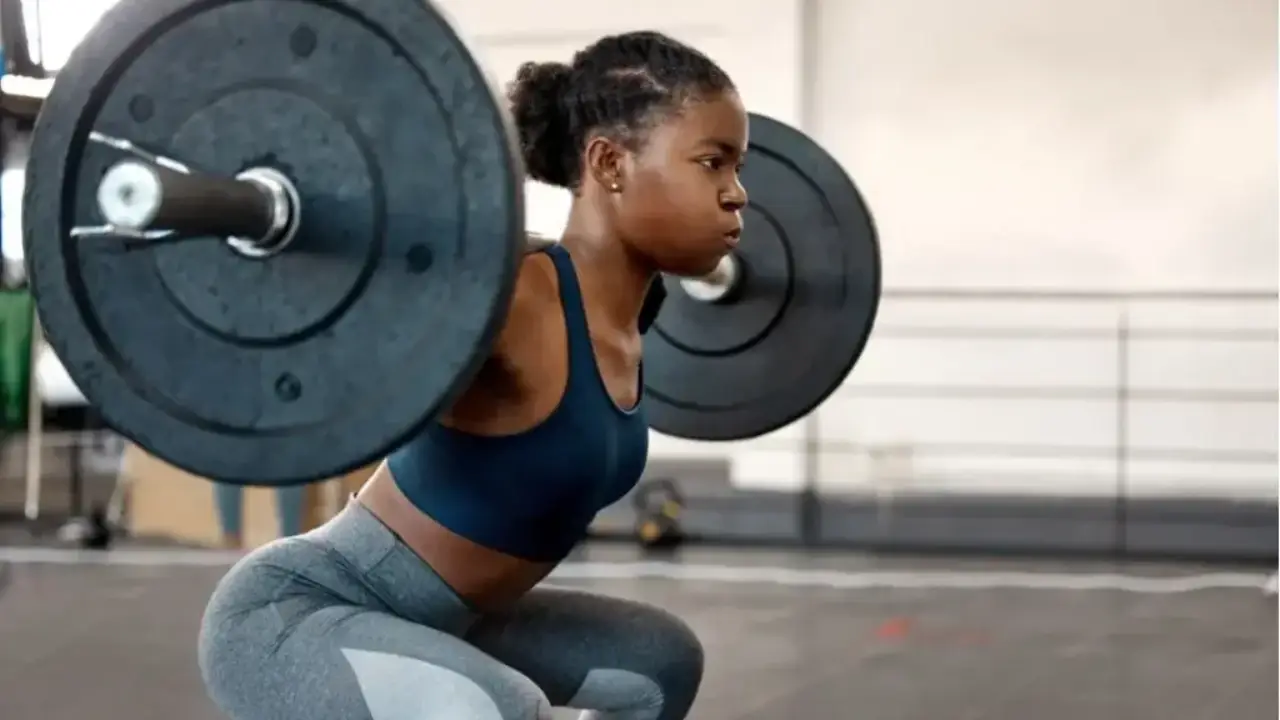
When you apply this piston blueprint to a heavy lift like a squat, the timing sequence shifts to synchronize with your movement mechanics and your lifting breath holds. As you lower yourself down into the bottom of the squat, you inhale and eccentrically lengthen both your diaphragm and your pelvic floor. If you are using a modified Valsalva maneuver for a maximal weight attempt, you lock that pressurized air jacket at the bottom of the movement.
The moment you hit the transition point to drive the weight back up, you must initiate the ascent by lifting your pelvic floor first, followed immediately by your external abdominal brace. This strategy ensures that the base of your cylinder is completely locked and supported right as you face the maximum mechanical load, protecting your spine and multiplying your upward force production.
Reclaiming Internal Power
True core strength is an inside-out equation that requires absolute coordination between your upper respiratory mechanics and your lower pelvic structure. You can build a chiseled midsection and lift impressive weights, but if your internal hydraulic piston is disconnected, your physical framework is operating on a dangerous foundation. By prioritizing the natural synchronization of your two diaphragms and learning to lift your pelvic floor before you brace your abs, you plug your internal pressure leaks and insulate your body against injury. Turn on the pelvic piston, master your internal hydraulics and experience the power of a body moving with absolute structural integrity.
Advance Your Recovery and Sports Medicine Expertise
Mastering internal core stabilization, deep fascial lines and pressure-managed rehabilitation protocols requires moving beyond standard fitness blueprints. If you want to bridge the gap between clinical performance and orthopedic health, explore our Sports Medicine Specialist course. Gain the advanced credentials needed to evaluate deep structural pathologies, eliminate kinetic pressure leaks, accelerate athletic recovery and protect your clients from chronic lower back or pelvic injuries.
Written by: L.R. Moxcey
