
Training the Sixth Sense of Fitness
When we step onto the gym floor, we are conditioned to outsource our physical awareness to external feedback loops. We stare into mirrors to monitor our structural positioning, track our pacing via flashing green screens on treadmills, log our training numbers into digital spreadsheets and count our daily steps through smart rings. We treat human movement as a technical equation that must be constantly measured by a piece of technology, assuming that if data is not actively captured on a screen, the session has no structural value.
However, clinical neurology and sports performance science have exposed a massive flaw in this technologically dependent model. True physical longevity, injury resilience and athletic mastery do not come from tracking external metrics. They are directed by a hidden internal sensory network known as Interoceptive Awareness. This is your brain’s ability to map, process and interpret the internal physiological state of your own body, from the subtle shift in your heart rate to the deep mechanical tension in your muscle fibers. When you live with a blunt or disconnected interoceptive system, you lose touch with your body's survival signals. This sensory blindness causes you to ignore early warnings of injury, over-train your tissues into chronic burnout and struggle to differentiate between deep physical exhaustion and temporary mental fatigue.
The Neurology of the Internal Map
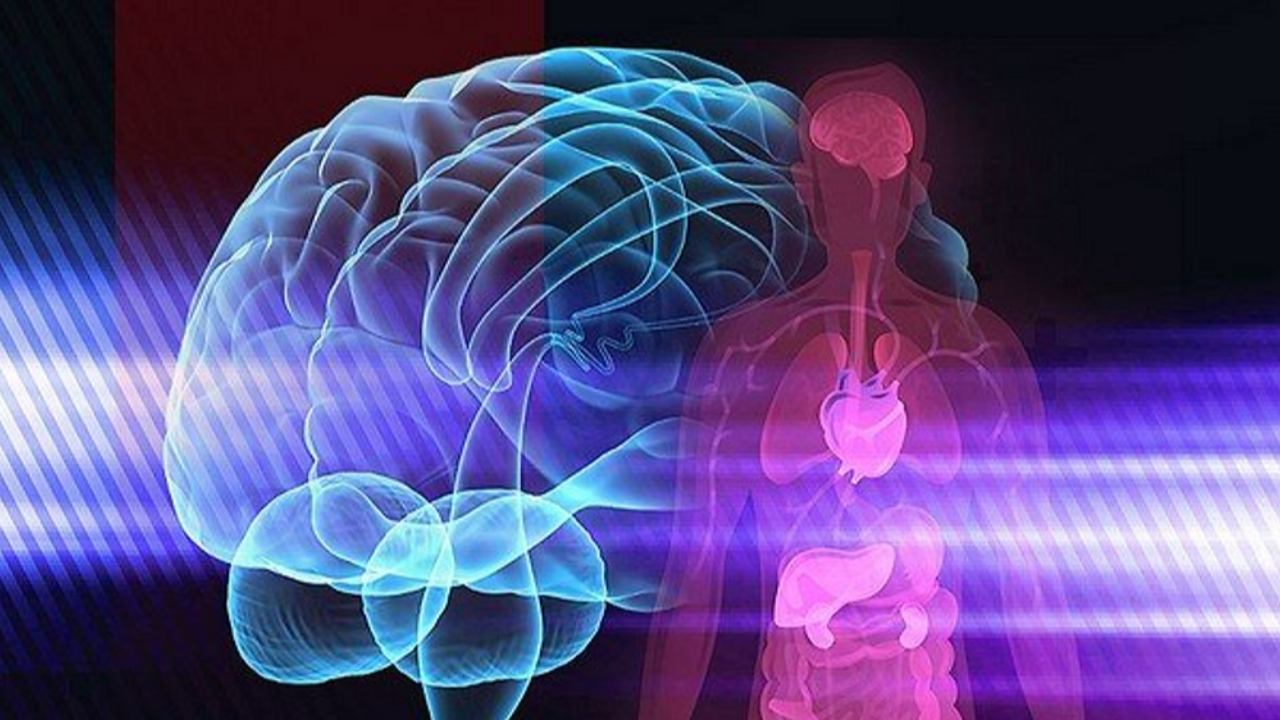
To understand how interoception operates, you have to look at how your nervous system gathers information. While proprioception maps where your limbs are located in three-dimensional space, interoception maps how your internal organs and tissues feel from the inside out. Your body houses a vast highway of unmyelinated sensory fibers that constantly siphon data from your heart, lungs, gut and muscles. This network relies heavily on unmyelinated free nerve endings acting as interoceptive mechanoreceptors embedded deep within your fascial layers and blood vessels, driving that physiological data straight up your spinal cord to a specialized structure in your brain called the insular cortex.
The insular cortex functions as your internal command center, taking these messy physiological signals and assembling them into a coherent mental feeling. An individual with sharp interoceptive clarity can feel the exact moment their heart rate down-regulates during a rest period, accurately gauge their level of respiratory distress and sense when a joint capsule is approaching a mechanical limit.
Conversely, a blunted interoceptive system forces an individual to rely entirely on external rules, pushing through sharp joint pain because their tracking app says they haven't burned enough calories, or skipping a workout because a wearable device arbitrarily labeled their recovery status as low. When you ignore your internal map in favor of external metrics, your brain experiences a state of sensory mismatch that increases your baseline cortisol, dampens your motor unit recruitment and compromises your physical performance.
Breaking the Smart Device Crutch
Fitness culture has fostered a persistent myth that the more biometric data you collect through wearable technology, the more optimized your health will be. We have become an industry of data collectors who are profoundly illiterate in our own physical sensations. People look at their smartwatches to determine if they had a good night of sleep instead of simply assessing how their body feels when their eyes open. They look at a target heart rate zone on a screen to decide if an interval session was hard enough instead of listening to the metabolic signals in their lungs and legs.
This reliance on external tracking creates a major psychological crutch that actively degrades your interoceptive capacity. Your brain operates on a strict use-it-or-lose-it principle. When you delegate the task of monitoring your physical state to a piece of technology, the neural pathways connecting your insular cortex to your tissues begin to weaken. You become completely dependent on an external device to tell you how to train, how to eat and how to rest. Reclaiming your fitness autonomy requires putting down the tracking tools and re-educating your nervous system to read its own internal pharmacy.
Navigating the Edge of Exhaustion
The ultimate performance benefit of developing sharp interoceptive awareness is the ability to navigate the boundary between high-intensity output and over-training. Every athlete eventually hits a point in their training cycle where their mind tells them to stop. This mental barrier can be driven by two entirely different biological realities, which are true systemic physical exhaustion or simple subconscious mental fatigue. A lifter with poor interoceptive awareness cannot tell the difference between these two states, often making the mistake of pushing through genuine neural depletion, leading straight to joint injuries, tissue tears and chronic fatigue.
Sharpening your internal map allows you to read your physiological signals with absolute precision, specifically through tracking your real-time vagal tone activation. You learn to recognize that a burning sensation in your quadriceps is simply a metabolic byproduct to be embraced, while a sudden, dull ache in your knee capsule is a hard biological command to stop the movement. It allows you to accurately measure your heart rate recovery window based on internal calm rather than a blinking digital clock.
Training the Internal Landscape
Re-educating your nervous system to read its internal data requires shifting your focus toward physical sensation during your training warm-ups and execution phases. You can systematically rebuild these pathways by introducing specific mindful tracking protocols into your routine. Begin your next workout by executing a dedicated interoceptive scan. Stand with your feet flat on the floor, close your eyes and spend sixty seconds focusing entirely on your internal environment without moving. Consciously track the rhythm of your resting breath, feel the pulsation of your heartbeat in your chest and notice any areas of subtle tightness or warmth across your frame. This simple sensory scan wakes up the insular cortex, preparing your brain to receive accurate physiological data before you pick up a barbell.
Once you begin your exercise sets, practice the protocol of perceived exertion matching. Instead of looking at your fitness tracker to evaluate your intensity, assign your effort a subjective rating based entirely on your internal sensations of breathlessness, local muscle fatigue and heart rate acceleration. Note your predicted score and check your digital device after the set to see how closely your internal guess matches the objective data. Over time, your internal tracking will become so accurate that you can safely ditch the external trackers, allowing your body's natural wisdom to dictate your training intensity, rest periods and recovery volume.
The Sovereign Machine
True athletic evolution is not an exercise in digital tracking and external validation. Your physical potential is completely bound by the accuracy of the relationship between your brain and your tissues. By prioritizing interoceptive awareness and learning to read your internal map with absolute precision, you break free from the trap of technological dependency. Stop outsourcing your physical health to smart screens and wearable sensors. Clean the internal windshield of your nervous system, listen to the biological signals your cells are constantly sending and experience the power of a body moving with absolute self-regulation and mastery.
Written by: L.R. Moxcey
